Fair Himalayan

Everest base camp

Trip Facts

Duration

14 Days

Difficulty Level

Moderate

Max. Altitude

5,364 meters

Group Size

+2

Trip Starts

Kathmandu

Trip Ends

Kathmandu

Group Style

Private & Group

Best Season

March-May/September-November

Duration

14 Days

Difficulty Level

Moderate

Max. Altitude

5,364 meters

Group Size

+2

Trip Starts

Kathmandu

Trip Ends

Kathmandu

Group Style

Private & Group

Best Season

March-May/September-November

Highlights

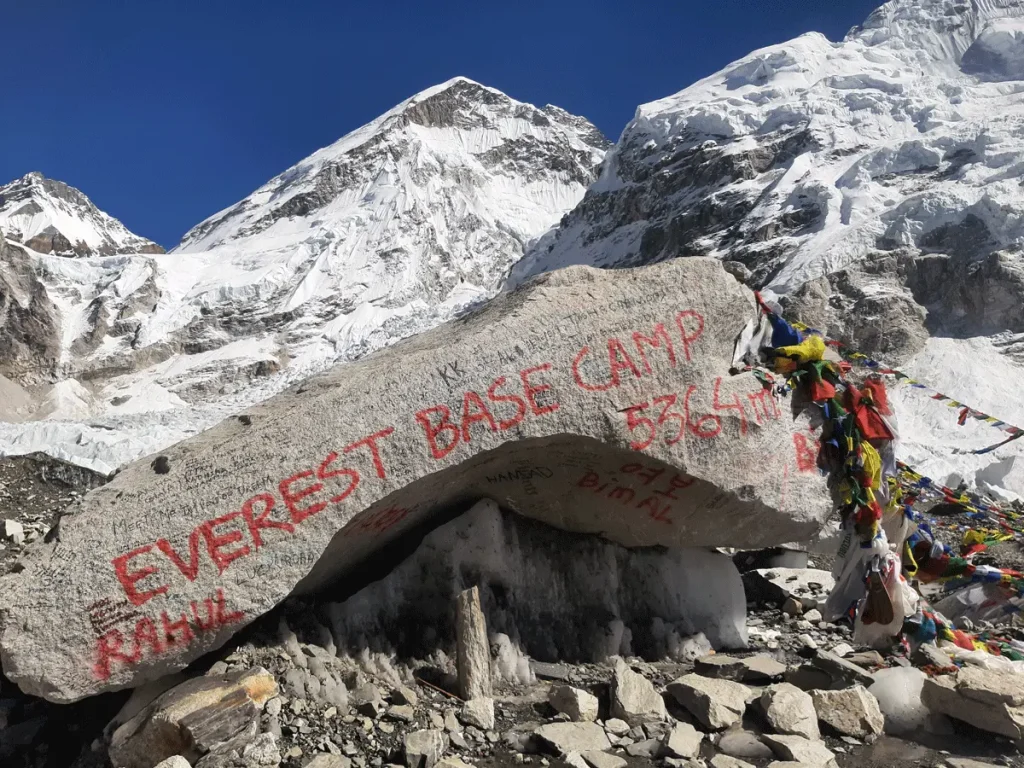
Everest Base Camp is one of the most popular trekking destinations in Nepal, attracting thousands of visitors every year. It is located in the Khumbu region of the Solukhumbu District at an altitude of 5,364 meters. This trek offers a unique opportunity to experience the rich culture, traditions, and history of the Sherpa people, who are well known for their mountaineering skills and hospitality. Sherpas have played a vital role in Himalayan expeditions for generations, and mountain guiding is one of the main professions in the Khumbu region due to their natural adaptation to high-altitude environments.

The trek is a paradise for outdoor and adventure enthusiasts, offering stunning landscapes and breathtaking views of some of the world’s most iconic mountains. Trekkers can enjoy magnificent sights of Mount Everest (8,848 m), Kongde Ri (6,187 m), Thamserku (6,623 m), Kusum Kanguru (6,367 m), and Ama Dablam (6,812 m). Mount Everest, also known as Sagarmatha in Nepali, is a lifelong dream destination for millions of people around the world who wish to take a step toward the base of the highest mountain on Earth.

The final overnight stop of the trek is Gorakshep, situated at an altitude of 5,164 metres, from where trekkers can reach Everest Base Camp and also enjoy a close view of Mount Everest. The trek usually begins in Lukla (2,860 m), and because of the rapid altitude gain, trekkers need to be both mentally and physically prepared. This can be challenging, especially for beginners who have never done high-altitude trekking before.

It is highly recommended that trekkers prepare themselves by doing short hikes or treks in their hometown for a few weeks before joining the Everest Base Camp trek. Those with experience trekking above 4,000 metres will generally find the journey more comfortable, with fewer difficulties.

The best seasons to trek to Everest Base Camp are spring (March to May) and autumn (September to November), when the weather is stable, and the mountain views are at their best. The standard trek duration is 14 days. However, it is advisable to keep 3–4 extra days as a buffer, as flights between Kathmandu and Lukla are often delayed or cancelled due to bad weather. Having extra days provides flexibility and ensures a more relaxed and enjoyable trekking experience.

Itinerary

Day 1: Arrival in Kathmandu

Arrive at Tribhuvan International Airport, Kathmandu, and transfer to your hotel in Thamel. After check-in, your trekking guide will meet you for a short, informative briefing on the Everest Base Camp trek, including safety, route details, and preparations.

Day 2: Fly to Lukla and Trek to Phakding (2,600 m) – 3.5 Hours

Early in the morning, take a scenic flight to Lukla, which takes approximately 25–30 minutes. Upon arrival, begin your first day of trekking toward Phakding village. This is a relatively easy walk, allowing you to adjust to the trail and altitude. Overnight stay in Phakding.

Day 3: Day 3: Trek to Namche Bazaar (3,440 m) – 6 to 7 Hours

Today’s trek takes you along the Dudh Koshi River, crossing several suspension bridges, including the famous Hillary Suspension Bridge. You will pass through villages and forested trails before a final steep uphill climb brings you to Namche Bazaar, the main trading hub of the Khumbu region.

Day 4: Acclimatisation Day in Namche Bazaar

This day is reserved for acclimatisation to help your body adjust to the altitude. You will hike to the Everest View Hotel (3,880 m), where you can enjoy stunning panoramic views of Mount Everest, Lhotse, Ama Dablam, and surrounding peaks. In the afternoon, you can explore Namche Bazaar, visit local markets and museums, or relax at cafés.

Day 5: Trek to Tengboche (3,860 m) – 5 to 6 Hours

The trail continues with a mix of flat paths and downhill sections, then crosses a suspension bridge. After passing the checkpoint, you climb uphill through forested trails to reach Tengboche. This village is home to the famous Tengboche Monastery, with spectacular views of Ama Dablam and Everest.

Day 6: Trek to Dingboche (4,410 m) – 6 Hours

Today, you walk through lush forests and cross a suspension bridge. The trail passes through the Deboche, Pangboche, and Shomare villages before reaching Dingboche. The scenery gradually changes as you enter the alpine zone, with wide valleys and towering Himalayan peaks.

Day 7: Acclimatisation Day in Dingboche

On this acclimatisation day, you hike to Nangkartshang Peak (5,083 m), a 2–3 hour one-way hike. From the viewpoint, you will enjoy a 360-degree panoramic view of the Himalayas, including Ama Dablam, Makalu, Lhotse, and Island Peak. In the afternoon, you can explore Dingboche village and relax at a local café while enjoying the mountain views.

Day 8: Trek to Lobuche (4,940 m) – 5 Hours

This is a relatively short trekking day. You will walk for about 2–3 hours to Thukla, where you stop for lunch. Afterward, the trail climbs uphill past the memorials dedicated to climbers before continuing on a gradual path to Lobuche.

Day 9: Trek to Gorakshep (5,164 m) and Everest Base Camp (5,364 m) – 6 to 7 Hours

Trek to Gorakshep, the last settlement on the route. After reaching your lodge and resting briefly, continue your hike to Everest Base Camp. The trail follows glacier moraines and rocky terrain. At Base Camp, enjoy close-up views of the Khumbu Icefall, Mount Everest, and Lhotse. Spend 30–40 minutes taking photos before returning to Gorakshep for the night.

Day 10: Hike to Kala Patthar (5,545 m) and Trek to Pheriche (4,371 m) – 6 to 7 Hours

Early in the morning, hike uphill to Kala Patthar for sunrise views. From the summit, you will witness breathtaking views of Mount Everest (8,848 m), Pumori (7,161 m), Nuptse (7,861 m), Lingtren (6,749 m), and Khumbutse (6,665 m). After descending back to Gorakshep for breakfast, continue trekking downhill to Pheriche.

Day 11: Trek to Namche Bazaar (3,440 m) – 7 to 9 Hours

This is a long but scenic day of trekking. The trail mostly descends through alpine terrain and forests, crossing several suspension bridges. You will walk through villages and gradually return to Namche Bazaar for an overnight stay.

Day 12: Trek to Lukla (2,860 m) – 6 to 7 Hours

Today’s trek mostly follows downhill trails. You will pass through villages such as Phakding, Monjo, Kyangjuma, and Phunki Tenga before reaching Lukla. This is your final trekking day in the Khumbu region.

Day 13: Fly Back to Kathmandu

After breakfast, take an early morning flight from Lukla to Kathmandu. Upon arrival, transfer to your hotel and enjoy a free afternoon for rest or sightseeing.

Day 14: Departure

Transfer to Tribhuvan International Airport for your onward journey back home.

Cost Includes

  • Airport pickup and drop-off services
  • Two nights’ accommodation in Kathmandu with breakfast
  • Accommodation throughout the trek
  • Pasang Lhamu Rural Municipality permit fee
  • Sagarmatha National Park entry fee
  • Wages, meals, and insurance for the guide and porter
  • Three main-course meals per day during the trek (breakfast, lunch, and dinner) with one cup of black tea per meal
  • Round-trip domestic flights: Kathmandu–Lukla–Kathmandu

Price Excludes

  • Personal expenses during the trek
  • Wi-Fi, hot showers, snacks, and dessert items on the trek
  • Soft drinks and alcoholic beverages
  • Tips for the guide and porter

Stress-Free Booking Guarantee

Need Help? Ask the trip expert

*Travel pros with +27 years of experience let’s plan your trip!